


SAVE Environmental has patented a novel technique for planting eelgrass (Zostera marina), a critical shallow-subtidal habitat. SAVE Environmental’s technique is called “Seeds of Eelgrass Attached to Shellfish” (SEAS), which uses the natural burrowing behavior of hard clams (Mercenaria mercenaria) as a nature-based solution to position eelgrass seeds in the ideal location for germination. The SEAS method uses hard clams native to the Atlantic coast of North America and which are found within eelgrass meadows in shallow estuaries.


SAVE Environmental has engineered a distribution system called the ZM1 (after the Latin name of eelgrass Zostera marina) for large-scale deployments. Clams are fed into the machine, separated, and flow onto a moving track that deposits them at ideal spacing into the water off the back of the boat. The ZM1 can accommodate clam widths from 8 to 127 mm (1/3 to 5 inches) and spaces them out before they hit the water. The boat then uses the lawnmower strategy of even sweeps back and forth across the site to fill the acre.
Clams are deployed approximately 17 to 40 inches apart which is easier to control using the ZM1. This strategy reduces predation by spreading the clams evenly over a large area of the bay bottom.
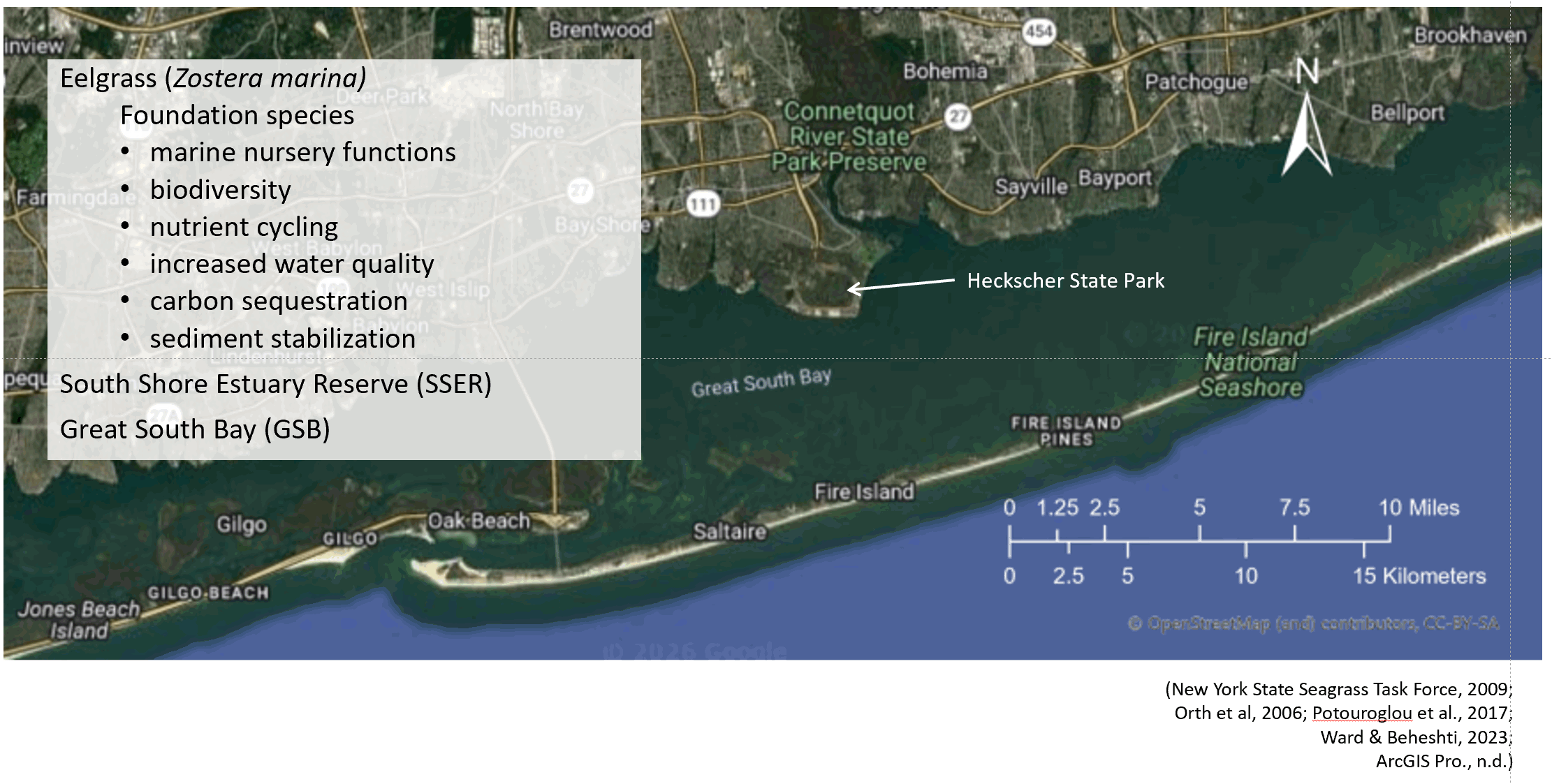
The 2026 season continues work east of Heckscher State Park, part of the South Shore Estuary Reserve (SSER) of New York. See the Project page for details.
The SSER is 326 square miles of bays and tidal wetlands approximately 75 miles by 5 miles located between Long Island and Fire Island.
The map shows the Great South Bay, the central area of the Reserve, with the remainder stretching into the narrower east and west estuaries.
SPONSORS




Brentwood HIgh School


Hunt City Chiropractic
Huntington, NY